

Managing a live construction or industrial worksite takes constant attention. Project managers are dealing with schedules, subcontractors, materials, weather, equipment, client expectations, and the daily pressure to keep work moving.
In that environment, safety can quickly become something that gets handled after the fact. Forms get completed. Inspections get filed. Toolbox talks get documented. The paperwork may be there, but that does not always mean the risk is being managed on site.
Paperwork is important. It supports compliance, protects the company, and creates a record of due diligence. What it cannot do is stop an unsafe lift, correct missing fall protection, or catch a hazard before someone gets hurt.
That is where onsite safety support makes a real difference.
Having a qualified safety professional on site gives your project an extra layer of protection. It helps connect your safety program to what is actually happening in the field.
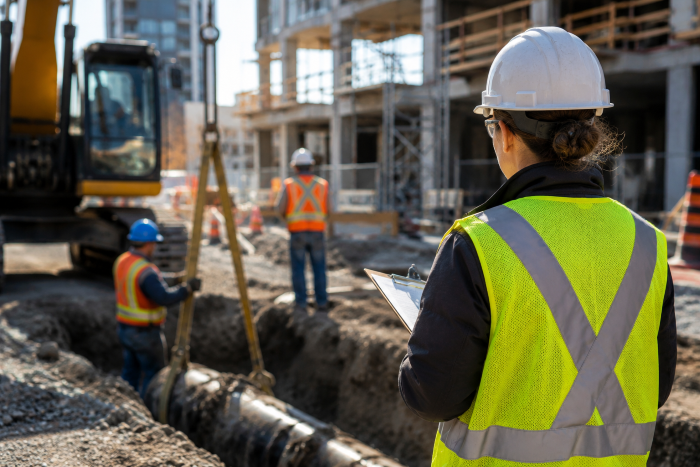 Safety Is Stronger When It Is Visible
A strong safety culture is built on the worksite. Policies and procedures matter, but workers also need to see that safety is being taken seriously during the day-to-day work.
When a safety professional is present on site, it sends a clear message to crews and subcontractors. Safe work is expected. Hazards will be addressed. Shortcuts will not be ignored.
That visible presence can change behaviour in practical ways. Workers are more likely to use PPE properly, follow site requirements, ask questions, and speak up when something does not look right.
It also helps supervisors. They are not left carrying the full weight of safety oversight while also managing production, quality, scheduling, and crew coordination.
Hazards Change Throughout the Day
Construction and industrial worksites are constantly changing. A safe access route in the morning may be blocked by materials in the afternoon. Weather can affect ground conditions. Equipment movement can create new blind spots. A subcontractor may start a task that introduces a risk no one planned for earlier in the day.
Periodic inspections are useful, but they only capture one point in time. Onsite safety support allows hazards to be identified and corrected as work is happening.
That can include:
- addressing unsafe work practices before they lead to an incident
- correcting missing or improper PPE
- reviewing high-risk tasks as conditions change
- identifying access, housekeeping, or equipment hazards
- supporting supervisors with real-time safety decisions
- helping crews adjust when weather, site layout, or sequencing changes
This kind of support is especially valuable on busy sites, multi-trade projects, and higher-risk work where conditions can shift quickly.
OHS Compliance Needs Practical Field Support
Provincial occupational health and safety requirements can be complex. Site supervisors and foremen already have a full workload. Expecting them to manage production and stay on top of every safety requirement creates room for things to be missed.
Onsite safety professionals help close that gap.
They understand how legislation, hazard assessments, inspections, safe work practices, documentation, and worker training connect on a live worksite. They can spot compliance issues early and help correct them before they become larger problems.
If an OHS officer or client representative arrives on site, your team is in a stronger position when documentation is current, hazards are being managed, and workers understand the safety expectations.
Less Safety Paperwork for Site Leads
Superintendents, site leads, and project managers are responsible for keeping work moving. When safety paperwork gets added to everything else on their plate, it can become rushed, delayed, or inconsistent.
Onsite safety support helps reduce that burden.
A safety professional can assist with:
- toolbox talks
- site inspections
- hazard assessments
- incident and near-miss reporting
- subcontractor orientations
- safety documentation
- follow-up on corrective actions
- verification of training, tickets, and certifications
This gives site leadership more time to focus on production while still keeping safety active and organized.
 Subcontractor Safety Needs Attention
Subcontractor oversight is one of the biggest safety challenges on a multi-trade worksite.
Your company may have a strong safety program, but every subcontractor entering the site still needs to understand and follow the site safety requirements. If they arrive without the right training, documentation, PPE, or awareness of site-specific hazards, the project is exposed.
Onsite safety support helps make subcontractor management more consistent.
That includes confirming orientations are completed, reviewing required documentation, checking certifications, watching for unsafe work practices, and making sure subcontractors are following the same safety expectations as everyone else on site.
This is not about slowing trades down. It is about making sure the work is done safely and that the project owner, general contractor, and site leadership are not left carrying unnecessary risk.
Onsite Safety Support Protects People, Projects, and Profitability
A serious incident affects far more than the day’s schedule. It can lead to injury, investigation, downtime, fines, insurance issues, legal exposure, damaged client relationships, and delays that ripple through the entire project.
The human cost is always the most important concern. Workers deserve to go home safely at the end of the day.
There is also a business case for stronger onsite safety support. When hazards are managed early, documentation is current, subcontractors are better controlled, and supervisors have access to expert guidance, the project runs with fewer disruptions.
For some projects, full-time onsite safety coverage makes sense. For others, part-time onsite support or scheduled worksite inspections may be enough. The right level of support depends on the size of the project, the risk level, the number of workers, the type of work, and the capacity of your internal team.
The key is having the right safety support in place before problems show up.
Need Onsite Safety Support for Your Project?
Bow Valley Safety provides practical On Site Safety Support for construction and industrial worksites. Whether you need worksite inspections, supervisor support, subcontractor oversight, or fractional safety leadership, our team helps keep safety active where the work is happening.
Book a safety call to find out what level of support makes sense for your On Site Safety Support.