

As 2026 wraps up, Alberta contractors are finishing projects, planning 2027 work and adjusting to winter conditions. Safety records can slip down the priority list until a general contractor asks for them or an audit date appears.
The hazard assessments may be on one supervisor’s phone, training records in the office, and corrective actions buried in email. The work may have been done, but finding proof becomes another job.
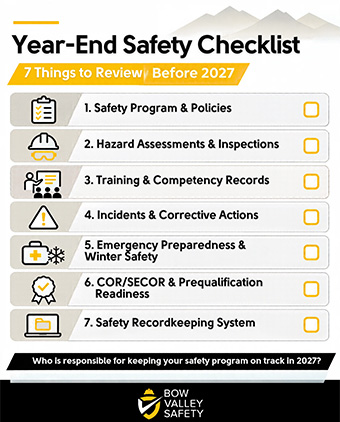
A year-end safety review does not have to be complicated. Start with these seven checks to see what is current, what is missing and who needs to follow up.
1. Review Your Safety Program and Policies
 Does your safety manual still describe the work your crews actually do? New equipment, bigger projects and changing roles can make procedures outdated.
Check:
- Have your operations or work procedures changed in 2026?
- Do supervisors and workers understand their responsibilities?
- Are written procedures being followed on site?
Alberta employers with 20 or more regularly employed workers must have a formal health and safety program. Smaller employers still have applicable documentation and safety duties. See the Alberta health and safety program requirements.
Year-end action: Identify two or three procedures that need updating, and assign an owner and completion date.
2. Check Hazard Assessments and Inspections
Hazards change as a job progresses. A roofing crew may need to reassess access routes and fall risks after snow or ice changes site conditions.
Check:
- Are assessments current and specific to the task and site?
- Are worksite inspections documented?
- Were identified hazards corrected and the actions verified?
Alberta’s OHS Code, Part 2 sets requirements for hazard assessment and control.
Year-end action: Pull records from two recent jobs and check whether the paperwork matches actual site conditions.
3. Review Training and Competency Records
An experienced employee may still need orientation or training for unfamiliar equipment or a new site. Training is easier to manage when records follow workers between projects. A training matrix should show the worker, relevant qualifications and any applicable renewal dates.
Check:
- Are orientation and training records easy to find?
- Are required qualifications current for assigned tasks?
- Is there a process to identify missing or upcoming training?
Year-end action: Update your training matrix, confirm competencies and book any training that needs attention.
4. Review Incidents, Near Misses and Corrective Actions
Look for patterns, not just totals. Repeated vehicle and pedestrian conflicts on different jobsites may point to a larger traffic-control problem.
Check:
- Were incidents and near misses documented and investigated as required?
- Were corrective actions completed?
- Are similar problems showing up more than once?
Serious and potentially serious incidents have specific reporting and investigation requirements when they occur. Do not wait until year-end to address them. Confirm that corrections solved the underlying problem, rather than only being marked complete.
Year-end action: Review the 2026 log, close outstanding actions and flag recurring issues for supervisors.
5. Check Emergency Plans and Winter Readiness
Winter can change access roads, walking surfaces and emergency routes quickly. A plan that worked in September may not work in December. Emergency arrangements should also reflect changing worksite layouts and construction phases.
Check:
- Are emergency contacts, meeting points and access routes accurate?
- Do crews know the response and first aid arrangements for each site?
- Have ice, cold exposure and reduced visibility been assessed?
Year-end action: Walk an active site with a supervisor and update any emergency or winter controls that no longer fit.
6. Confirm COR/SECOR and Client Prequalification Readiness
A contractor can be ready to do the work but not ready to produce the records a client wants before awarding a job.
Check:
- Are certification status and applicable audit dates known?
- Can you retrieve the records your Certifying Partner or client may request?
- Have upcoming bid requirements been reviewed?
COR and SECOR are not universal legal requirements for Alberta contractors, but certain clients and contracts may require certification. SECOR does not necessarily satisfy a request for COR, so check bid terms carefully. Confirm your obligations with your Certifying Partner and the Alberta COR program. For more detail, see our article on digital systems and COR audit preparation.
Year-end action: Check your audit calendar and assemble a sample prequalification package before the next bid.
7. Make Safety Records Easier to Find
If a general contractor asks for hazard assessments, orientations or inspection reports tomorrow, could you send them without calling three supervisors? This matters when crews use a prime contractor’s system but do not retain easy access to their own records.
Check:
- How are forms completed and submitted in the field?
- Where are records stored, and who can access them?
- Which paperwork process creates the most rework?
The BVS Digital Safety System offers mobile safety documentation tools for smaller contractors. Its e-Hazard Assessment module generates PDF reports and is available for a free 30-day trial. A digital tool helps organize records, but does not replace safe work practices or supervision.
Year-end action: Choose one recurring paperwork problem to simplify before 2027.
Who Is Responsible for Keeping Your Safety Program on Track in 2027?
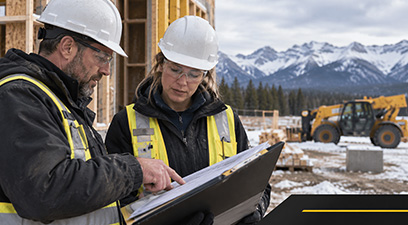 Finding gaps is the easy part. Someone still has to update procedures, monitor training, follow up on inspections and make sure corrective actions get finished.
In many small construction businesses, that work sits with an owner or supervisor who already has a full schedule. A full-time safety manager may be more than the company needs, but leaving the responsibility spread across several busy people is not much of a plan.
Bow Valley Safety provides fractional and temporary safety support tailored to the work involved: ongoing safety leadership for a set number of hours each month, temporary coverage during a staffing gap, or help with a defined project or audit.
Some businesses need a full-time professional. Others need better systems and reliable follow-through. The right choice depends on the workload, risk, number of sites and available internal capacity. External support can help manage the work, but employers retain their legal safety responsibilities. Not sure which approach fits? Read what kind of safety support your company may need.
Start 2027 With a Safety Plan That Works
If this checklist uncovered gaps, let’s talk about what is realistic for your crew and budget. Book a free 30-minute safety session with Bow Valley Safety to discuss the next steps.